北海道編 第2章:港町の記憶と、時代の境界線
ついに北海道に、降り立ったのだが、心身はまだスッキリしていなかった。
高揚感よりも、どこか他人事のような、不完全な感覚が支配していた。 その実感がようやく訪れたのは、車を降りて街を歩き、ふと目にした駅名の文字を見たときだった。「本当に来たんだ」と。 函館の街並みを歩いていると、過去の記憶が蘇ってきた。若い時に初めて横浜を訪れた時の感覚に似ていた。
今は近代的に発展してしまったが、当時の横浜が持っていた、海風と歴史が混ざり合う独特の情緒。それを思い出した。 日本史、特に幕末の動乱に惹かれる自分にとって、この街で外せない場所があった。五稜郭(Goryokaku)だ。
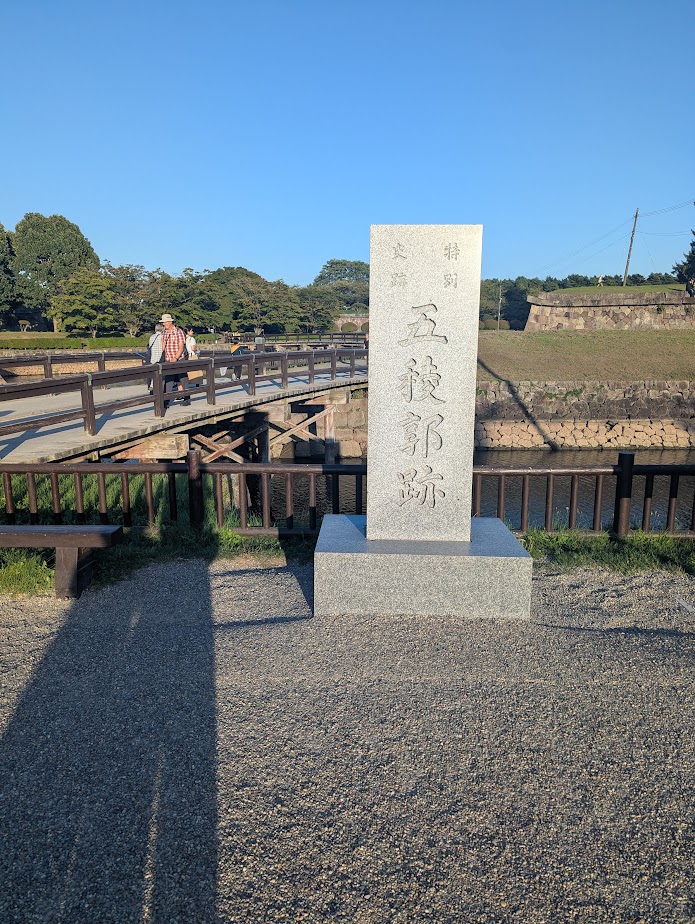
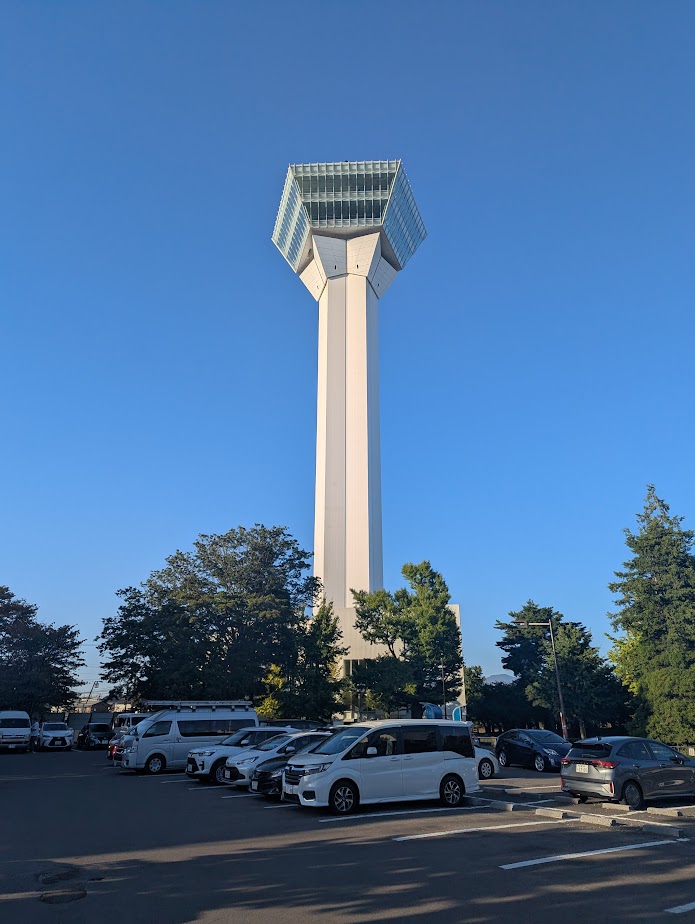
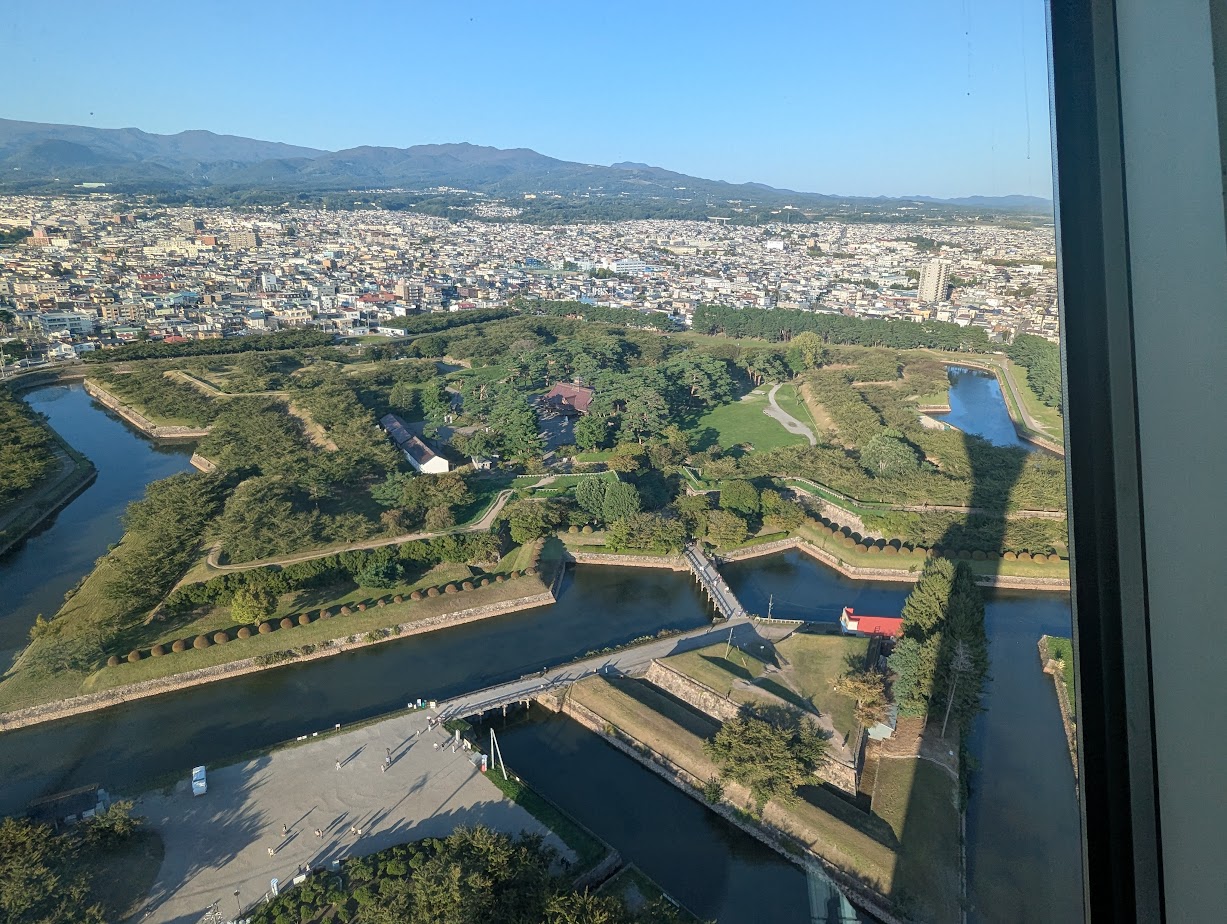
隣接するタワーに登り、眼下を見下ろすと、教科書で見た通りの巨大な五角形の星形が、鮮やかに大地に刻まれていた。
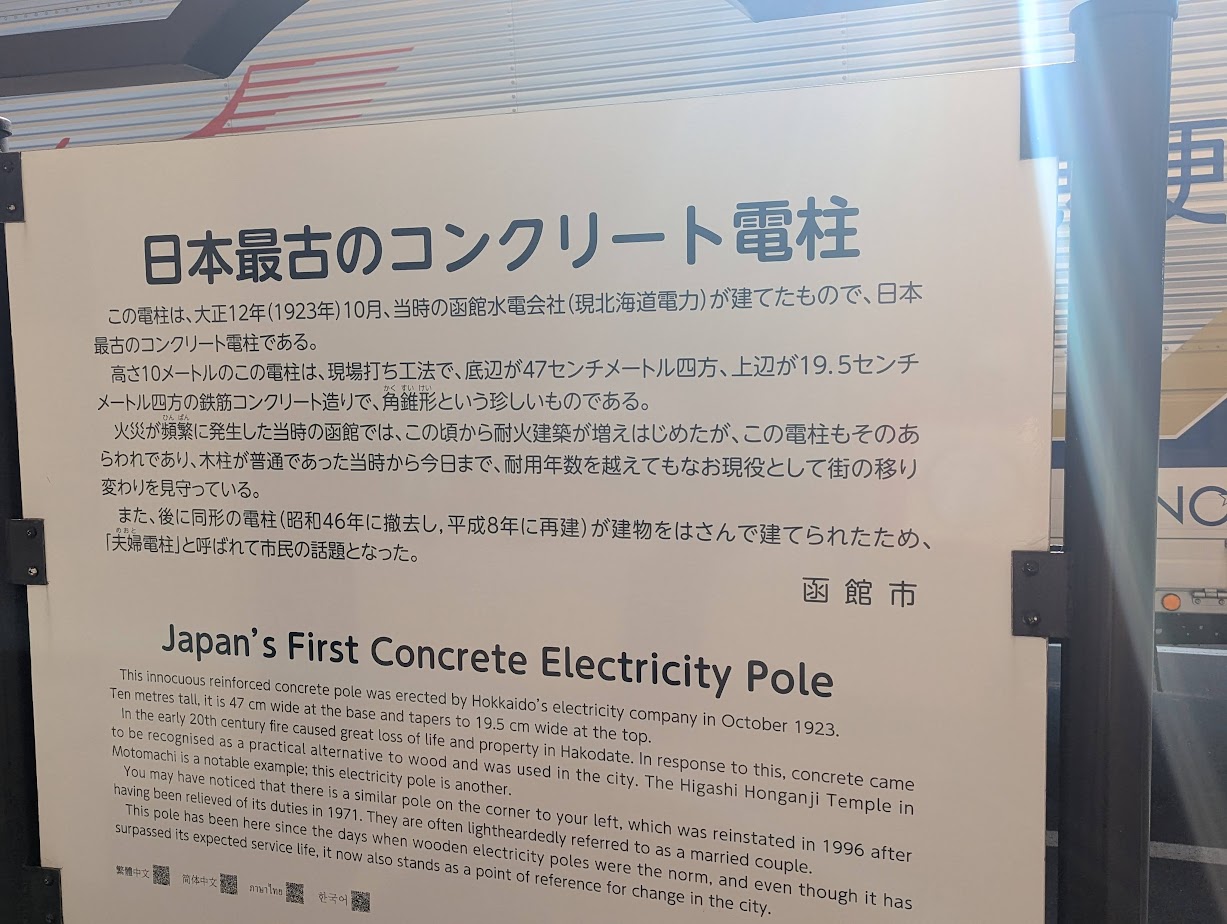
今の自分には、その生き方が羨ましいとすら感じた。 歩道に立つ一本の柱が目に留まった。そこには「日本最古のコンクリート電柱」という文字がある。
寺院や城に使われるはずの「日本最古」という言葉が、電柱という生活の道具に使われている。その不思議なギャップが少し面白かった。
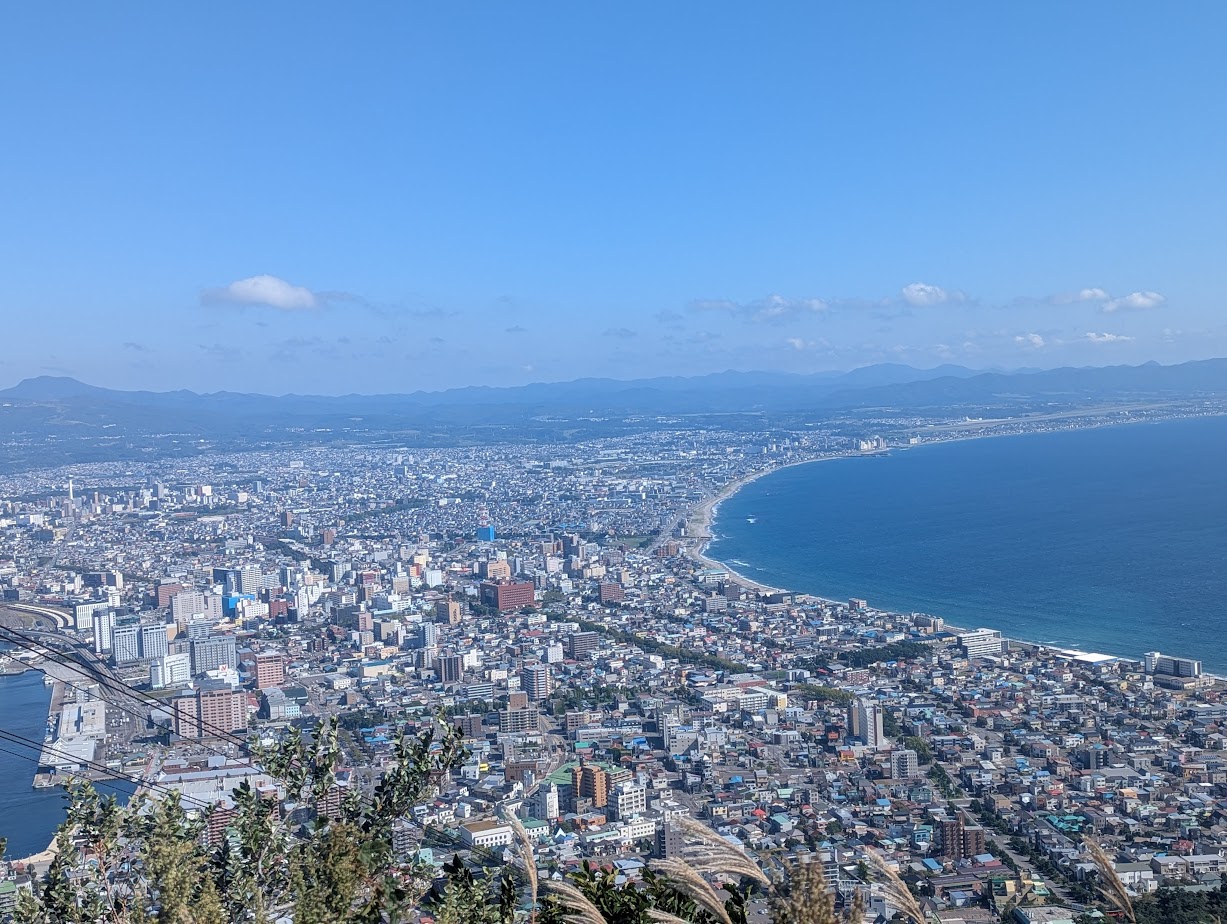
大間でマグロを食べたときも感じたが、本場で食べる味は、格別だった。 その後は、函館山展望台へ向かった。そこから見下ろす景色はあまりに有名だが、自分の目で見るとその美しさは想像を超えていた。世界各地から来た観光客が声を上げている。
体調はいまだ万全ではない。何より、観光がメインではないのだから。
10月3日(金) 天気 青森:晴れ 北海道:晴れ
移動: 横浜町ー大間港ー函館港(フェリーで移動)ー函館市内周遊
移動距離:陸路 約90km ※海路 約40km
北海道篇 第二章:港都的記憶,與時代的分界線
終於踏上了北海道的土地,但身心依舊未能感到清爽。
比起高昂的情緒,反而是一種與自己無關、飄忽不定的不真實感支配著全身。 那份真實感才終於湧上心頭,是當自己走下車、漫步在街頭,不經意看見車站牌上的字樣時。心裡想著:「自己真的來了啊。」 走在函館的街道上,過去的記憶悄然復甦。那種感覺,很像年輕時第一次造訪橫濱時的心情。
雖然現在的橫濱已經發展得非常現代化,但當時橫濱所擁有的、那種海風與歷史交織的獨特情調,此時在函館重新被喚醒了。 對於著迷於日本歷史、特別是幕末動亂的自己來說,這座城市有一個絕對不能錯過的地方。那就是五稜郭(Goryokaku)。
登上旁邊的展望塔俯瞰地面,和教科書上一模一樣的巨大五角星形,正鮮明地刻印在大地上。
對現在的我來說,那樣的生活方式甚至讓我有些羨慕。 人行道旁的一根柱子吸引了自己的目光。上面寫著「日本最古老的鋼筋混凝土電線桿」。
原本應該用在寺廟或城堡的「日本最古老」這個詞,竟然用在電線桿這種生活工具上。這種不可思議的落差感,讓自己覺得有些有趣。
就像在大間吃鮪魚時的感受一樣,在當地品嚐的滋味,格外美味。 隨後,自己前往了函館山展望台。從那裡俯瞰的景色雖然早已聞名遐邇,但當用自己的雙眼親自確認時,那份美麗依然超越了想像。來自世界各地的觀光客紛紛發出讚嘆之聲。
身體狀況依然沒有完全恢復。況且,這趟旅程的目的本來就不是為了觀光。
10月3日(星期五) 天氣 青森:晴天 北海道:晴天
移動:橫濱町-大間港-函館港(搭乘渡輪移動)-函館市內周遊
移動距離:陸路 約90km ※海路 約40km
Hokkaido-Chapter 2: Memories of a Port Town and the Boundary of an Era
Though I finally stepped foot in Hokkaido, my mind and body were still not refreshed.
Rather than elation, a detached, incomplete sensation—as if it were happening to someone else—dominated me. That reality only hit me when I got out of the car, walked the streets, and caught sight of the station name written down. "I'm really here," I realized. Walking through the streets of Hakodate, memories of my past began to resurface. It felt remarkably similar to the sensation I experienced when visiting Yokohama for the very first time in my youth.
Though Yokohama has since developed into a modern metropolis, I was reminded of the unique atmosphere it possessed back then—a blend of ocean breezes and living history. For someone like me, who is deeply drawn to Japanese history, especially the turbulence of the late Edo period, there was one place in this city that could not be missed: Goryokaku.
Climbing the adjacent tower and looking down, the massive pentagonal star-shaped fortress was vividly carved into the earth, exactly as I had seen in textbooks.
As I was then, I even felt envious of that way of living. A single pillar standing on the sidewalk caught my eye. It bore the words: "Japan's Oldest Concrete Utility Pole."
The phrase "Japan's oldest," which you would expect to be reserved for temples or castles, was being used for a mundane tool of daily life. The bizarre contrast was actually quite amusing to me.
As I had also felt when eating tuna in Oma, tasting it locally made it something special. Afterward, I headed to the Mount Hakodate Observatory. The view looking down from there is incredibly famous, but seeing it with my own eyes, its beauty surpassed all imagination. Tourists from all over the world were gasping in awe.
My physical condition was still far from perfect. Above all, sightseeing was not the main purpose of this journey.
October 3 (Fri) Weather — Aomori: Sunny Hokkaido: Sunny
Route: Yokohama Town - Oma Port - Hakodate Port (by ferry) - Hakodate City Tour
Travel Distance: Land approx. 90km *Sea approx. 40km
Hokkaido, chapitre 2 : Souvenirs d'une ville portuaire et frontière d'une époque
Bien que j'aie enfin posé le pied à Hokkaido, mon corps et mon esprit n'étaient toujours pas rafraîchis.
Plutôt que de l'exaltation, un sentiment de détachement et d'incomplétude dominait, comme si cela arrivait à quelqu'un d'autre. Cette réalité ne m'a frappé que lorsque je suis sorti de la voiture pour marcher en ville et que mes yeux se sont posés sur les lettres du nom de la gare. « J'y suis vraiment », me suis-je dit. En arpentant les rues de Hakodate, des souvenirs de mon passé ont refait surface. Cela ressemblait étrangement à ce que j'avais ressenti en visitant Yokohama pour la toute première fois dans ma jeunesse.
Bien que Yokohama soit devenue une métropole moderne, je me suis rappelé cette atmosphère unique qu'elle possédait alors, où la brise marine se mêlait à l'histoire. Pour quelqu'un comme moi, profondément attiré par l'histoire du Japon et particulièrement par les bouleversements de la fin du shogunat Edo, il y avait un endroit incontournable dans cette ville : Goryokaku.
En montant au sommet de la tour adjacente pour regarder en bas, l'immense étoile à cinq branches était distinctement gravée dans la terre, exactement comme dans les manuels scolaires.
Dans mon état d’esprit du moment, j’enviais même cette façon de vivre. Un poteau dressé sur le trottoir a attiré mon attention. On pouvait y lire : « Le plus ancien poteau électrique en béton du Japon ».
Cette expression de « plus ancien du Japon », que l'on s'attend à voir attribuée à des temples ou des châteaux, était utilisée pour un simple outil de la vie quotidienne. Ce décalage surprenant m'a paru assez amusant.
Comme je l’avais déjà ressenti en mangeant du thon à Oma, le déguster sur place lui donnait une saveur particulière. Après cela, je me suis rendu à l'observatoire du mont Hakodate. La vue qui s'étend en contrebas est mondialement célèbre, mais la voir de mes propres yeux offrait une beauté qui dépassait l'imagination. Des touristes venus des quatre coins du monde laissaient échapper des cris d'admiration.
Ma santé n'était toujours pas rétablie. Et après tout, le tourisme n'était pas le but principal de mon voyage.
3 octobre (ven) Météo — Aomori : Ensoleillé Hokkaido : Ensoleillé
Trajet : Yokohama-machi - Port d'Oma - Port de Hakodate (en ferry) - Visite de la ville de Hakodate
Distance parcourue : Voie terrestre env. 90 km *Voie maritime env. 40 km
Hokkaido-Kapitel 2: Erinnerungen an eine Hafenstadt und die Grenze einer Ära
Obwohl ich schließlich in Hokkaido ankam, waren Geist und Körper noch immer nicht erfrischt.
Statt Hochstimmung herrschte ein seltsam distanziertes, unvollständiges Gefühl vor – als ob es mich selbst gar nicht beträfe. Die Gewissheit stellte sich erst ein, als ich aus dem Auto stieg, durch die Straßen ging und mein Blick zufällig auf die Schriftzeichen des Bahnhofsnamens fiel. „Ich bin wirklich hier“, wurde mir klar. Als ich durch die Straßen von Hakodate schlenderte, erwachten Erinnerungen an meine Vergangenheit. Es ähnelte dem Gefühl, das ich hatte, als ich in meiner Jugend zum ersten Mal Yokohama besuchte.
Auch wenn Yokohama heute modern entwickelt ist, erinnerte ich mich an die ganz besondere Atmosphäre, die die Stadt damals hatte – eine Mischung aus Meeresbrise und lebendiger Geschichte. Für jemanden wie mich, der sich sehr für die japanische Geschichte und insbesondere für die Unruhen am Ende der Edo-Zeit interessiert, gab es einen Ort in dieser Stadt, den ich unbedingt besuchen musste: Goryokaku.
Als ich auf den benachbarten Turm stieg und hinunterschaute, war die riesige, fünfzackige Sternform genau wie im Lehrbuch deutlich in die Erde geprägt.
So wie es mir damals ging, beneidete ich diese Menschen sogar um ihre Lebensweise. Ein einzelner Mast am Gehweg fiel mir ins Auge. Darauf stand geschrieben: „Japans ältester Betonstrommast“.
Der Begriff „Japans ältestes“, den man eigentlich bei Tempeln oder Burgen vermuten würde, wurde hier für einen alltäglichen Gebrauchsgegenstand verwendet. Dieser skurrile Kontrast amüsierte mich ein wenig.
Wie schon beim Thunfisch in Oma fand ich, dass es besonders gut schmeckte, wenn man es vor Ort aß. Danach fuhr ich zum Observatorium auf dem Berg Hakodate. Der Ausblick von dort oben ist weltberühmt, aber als ich ihn mit eigenen Augen sah, übertraf die Schönheit jede Vorstellungskraft. Touristen aus aller Welt stießen Rufe des Staunens aus.
Meine Gesundheit war noch immer nicht optimal. Und vor allem stand das Sightseeing bei dieser Reise nicht im Vordergrund.
3. Oktober (Fr) Wetter — Aomori: Sonnig Hokkaido: Sonnig
Reise: Yokohama-machi - Hafen Oma - Hafen Hakodate (Fährüberfahrt) - Erkundung der Stadt Hakodate
Entfernung: Landweg ca. 90 km *Seeweg ca. 40 km